Holiday Plants That Are Toxic to Cats and Dogs
The most dangerous holiday plant isn’t the poinsettia. It’s the lily. Lilies in holiday bouquets can cause kidney failure in cats, and even pollen licked off fur or water from the vase is enough.
Poinsettias, on the other hand, have a scarier reputation than they deserve. Here’s how the common holiday plants actually rank, from “keep out of the house” to “fine.”
Holiday Plants Ranked by Risk
| Plant | Risk | What happens |
|---|---|---|
| Lilies (true lilies and daylilies) | Severe for cats | Kidney failure, even from small amounts of leaf, petal, pollen or vase water. Dogs usually get only stomach upset. |
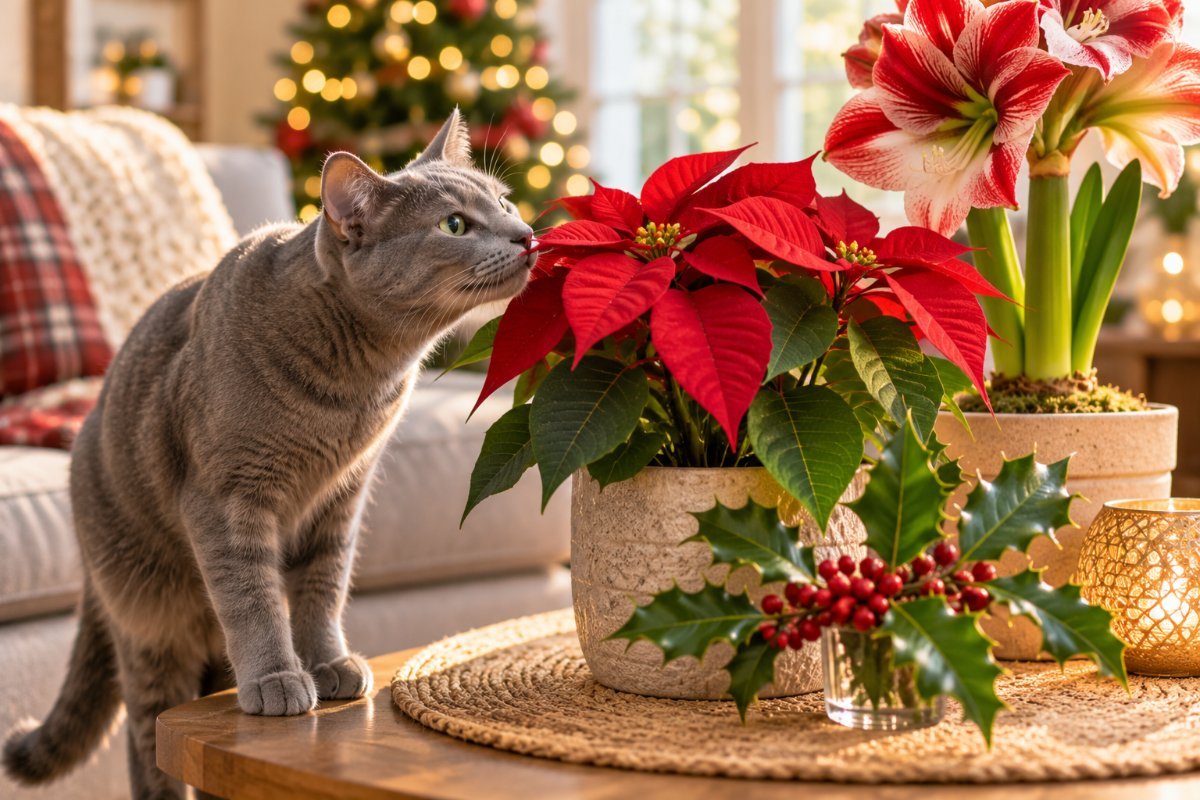
| Amaryllis | Moderate | Vomiting, drooling, belly pain and sometimes tremors. The bulb is the most toxic part. |
| Paperwhites and daffodils (Narcissus) | Moderate | Vomiting, diarrhea and drooling. Bulbs are worst, and forced-bulb kits are often on low tables. |
| Mistletoe | Moderate | Usually stomach upset. Larger amounts, especially of European mistletoe, can affect heart rate and blood pressure. |
| Holly | Mild to moderate | Vomiting, diarrhea and drooling. The spiky leaves also irritate the mouth. |
| Poinsettia | Mild | Drooling, mouth irritation and sometimes vomiting. Rarely serious. |
| Christmas tree (fir, pine, spruce) | Mild | Needles can irritate the mouth and stomach. Tree water with preservatives or standing bacteria is the bigger worry. |
| Christmas cactus | Non-toxic | Listed as non-toxic by the ASPCA. Eating a lot may still cause mild stomach upset. |
Why Lilies Are the One to Ban
Cats are uniquely sensitive to true lilies (Lilium) and daylilies (Hemerocallis). Early signs are vomiting, drooling and hiding, and kidney damage can follow within a day or two. Treatment works best when it starts within hours, so if you even suspect your cat chewed a lily or licked pollen, call your vet or poison control right away.
If you get flowers as a gift, check the bouquet before it comes inside. Many grocery-store holiday arrangements include lilies.
Pet-Safe Holiday Plants
You can still decorate with live plants. These are listed as non-toxic to cats and dogs by the ASPCA:
- Christmas cactus
- Rosemary topiaries
- African violets
- Orchids (Phalaenopsis)
- Bromeliads
- Spider plants
Non-toxic doesn’t mean edible. Any plant can cause a bit of vomiting if your pet eats enough of it.
Decorating Tips for Pet Homes
- Put toxic plants in rooms your pets can’t enter, or skip them entirely if you have cats.
- Cover the tree stand so pets can’t drink the water.
- Use fake berries and greenery for wreaths at nose height.
- Sweep up fallen needles and leaves daily.
- Keep bulb kits like amaryllis and paperwhites on high shelves.
If Your Pet Eats a Holiday Plant
Take a photo of the plant, estimate how much is missing and call your vet, the ASPCA Animal Poison Control Center at (888) 426-4435 or the Pet Poison Helpline at (855) 764-7661. Fees apply. With lilies and cats, go in even if your cat seems fine.
FAQ
Are poinsettias poisonous to cats and dogs?
Mildly. They can cause drooling, mouth irritation and sometimes vomiting, but serious poisoning is rare. Still, keep them out of reach.
Is mistletoe toxic to cats?
Yes. It usually causes vomiting and diarrhea. Large amounts can affect the heart, so call your vet if your cat eats some.
Are Christmas trees toxic to cats?
Fir, pine and spruce are only mildly toxic. Needles can irritate the mouth and stomach, and tree water can make pets sick. See our guide on keeping your cat out of the Christmas tree.
Is a Christmas cactus safe for cats?
Yes, it’s listed as non-toxic to cats and dogs by the ASPCA.
How much lily is toxic to a cat?
Very little. Chewing a leaf or petal, or licking pollen off fur, can cause kidney failure. Treat any exposure as an emergency.
Sources
Keep Reading
Get Pet Picks and Tips in Your Inbox
New guides, honest gear picks and the occasional reader pet feature. No spam.